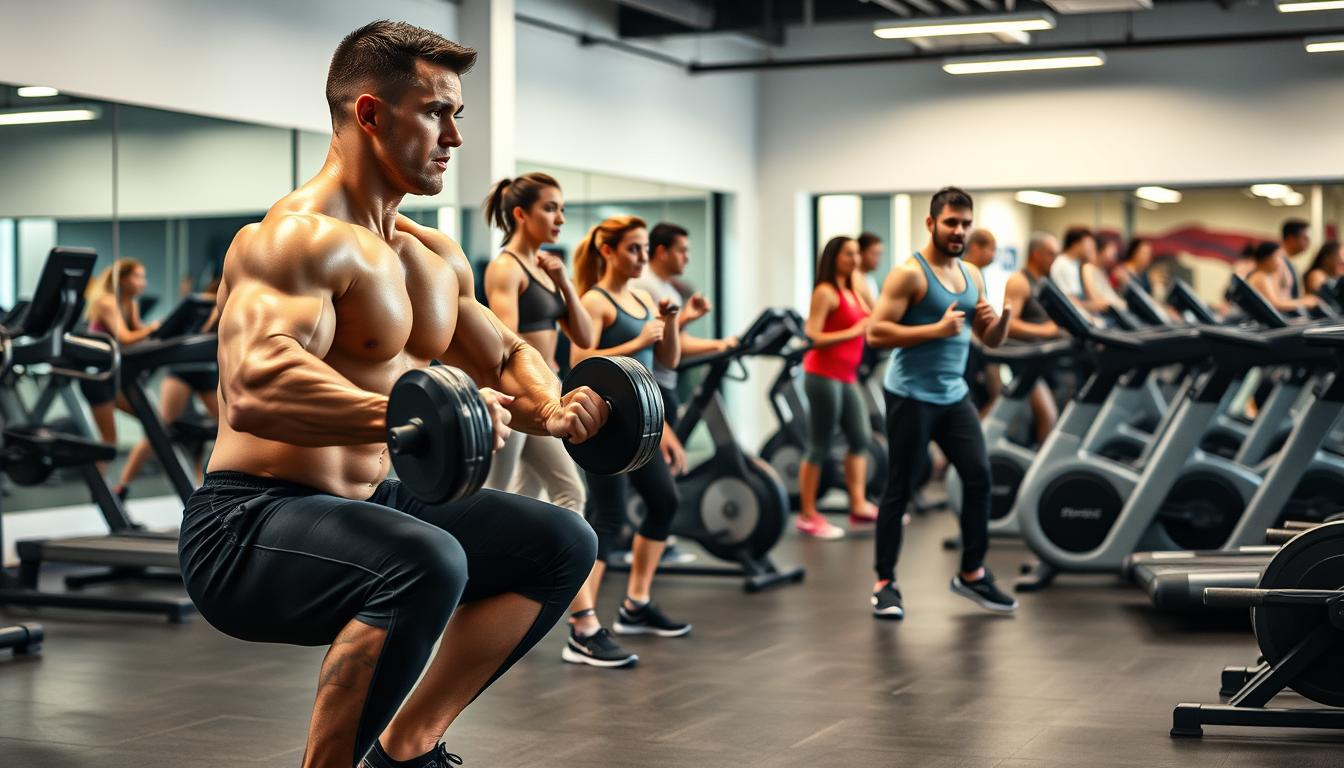
To get the best fitness, you need a good workout plan. Doing regular exercise routines helps change your body and health for the better.
Adding good exercise routines to your day can really boost your fitness. This article will show you the best workout ways to reach your fitness goals.
Key Takeaways
- Understanding the importance of physical fitness
- Learning effective exercise routines for body transformation
- Discovering top workout strategies for achieving fitness goals
- Improving overall health through regular exercise
- Enhancing fitness levels with a well-structured workout plan
The Science Behind Physical Fitness
Physical fitness comes from many body processes. To be fit, we need to know how our body works. This includes heart health, muscle strength, how long we can keep going, and how flexible we are.
Good exercise plans use science. Knowing how our body works helps us make training routines just right for us.
Key Components of Total Fitness
Total fitness has a few main parts:
- Cardiovascular endurance
- Muscular strength and endurance
- Flexibility
- Body composition
These parts work together for better physical fitness.
Setting Achievable Fitness Goals
Setting goals means knowing where we start and what we want to reach. This includes:
- Checking our current fitness
- Setting clear, reachable goals
- Creating a special exercise plan
By doing these steps, we can reach our fitness goals.
10 Proven Exercise Routines for Complete Fitness
To get fit, you need to do many kinds of exercises. A good plan should have strength training, cardio, and flexibility. This mix helps you stay healthy all over.
Full-Body Circuit Training
Full-body circuit training boosts your fitness fast. It’s a series of exercises done one after another with little rest.
Equipment Needed
You’ll need dumbbells, resistance bands, and a jump rope for this workout.
Step-by-Step Execution
Begin with a warm-up. Then, do 3-4 circuits of 8-12 exercises. These can be squats, push-ups, and lunges. Rest for 30-60 seconds between each circuit.
5×5 Strength Building Program
The 5×5 program is great for getting stronger. You do 5 sets of 5 reps for key exercises.
Optimal Exercise Selection
Focus on squats, deadlifts, and bench press. These exercises work on big muscles.
Progressive Overload Techniques
Keep getting stronger by adding a little more weight each time. Aim to increase the weight in small steps.
30-Minute HIIT Cardio Blast
HIIT is a quick way to boost your heart health. A 30-minute HIIT session can be very effective.
Interval Structure
HIIT has 20-30 seconds of hard work followed by 1-2 minutes of rest.
Modification Options
HIIT can be changed to fit your level. Adjust the intensity, how long you do it, and the exercises.
Functional Fitness Routine
Functional fitness routines make you better at everyday tasks. They improve your fitness overall.
Movement Patterns
These exercises use multi-planar movements. Examples are squats, lunges, and rotations.
Real-World Applications
These exercises enhance coordination, balance, and strength. They make daily tasks easier and lower injury risk.
Cardio-Focused Exercise Routines
Getting your heart rate up is key. Cardio workouts help your heart, lungs, and body use oxygen better. Adding cardio to your routine boosts your heart health.
Tabata Protocol Workouts
The Tabata protocol is a popular HIIT method. It mixes short, hard exercises with rest.
Timing and Intensity Guidelines
Tabata has 20 seconds of hard work and 10 seconds of rest. You do this for 4-6 cycles. Then, rest for 1-2 minutes before starting again.
Sample Tabata Exercises
Tabata uses sprints, burpees, jump squats, and mountain climbers. These are chosen for their high intensity.
Zone 2 Endurance Training
Zone 2 endurance training keeps your heart rate at 60-70% of its max. It’s great for building endurance without too much stress.
Heart Rate Monitoring
Monitoring your heart rate is key for Zone 2. A heart rate monitor helps you stay in the right zone.
Duration and Frequency
Zone 2 workouts last 30 to 60 minutes. You can do them 2-3 times a week. It’s a good routine for many people.
Cardio Equipment Routines
Use treadmills, ellipticals, and bikes for cardio. These machines let you control the intensity and time of your workouts.
Machine-Specific Programs
Many machines have pre-set programs. These change the intensity and time of your workouts. They keep things interesting and prevent plateaus.
Cross-Training Approaches
Switching machines prevents injuries and keeps workouts fun. Try a treadmill one day and an elliptical the next.
Strength Training Exercise Routines
A good strength training program helps you reach your fitness goals. It makes muscles stronger and improves sports skills. It also keeps you healthy. By doing different exercises, you get fit all over.
Push-Pull-Legs Split
The Push-Pull-Legs (PPL) split is a common workout plan. It splits exercises into three groups: pushing, pulling, and legs. This way, you work out all your muscles well.
Weekly Schedule Structure
This PPL plan is done over six days, with a rest day in between. For example, Monday is for pushing, Tuesday for pulling, and Wednesday for legs. Thursday is for pushing, Friday for pulling, and Saturday for legs.
Exercise Selection Guide
Choose exercises that work many muscles at once for PPL. For pushing, use the bench press. For pulling, try deadlifts. For legs, squats are best.
Bodyweight Strength Progression
Bodyweight exercises get harder as you get stronger. You can make them harder by changing how you do them or using bands.
Beginner to Advanced Movements
Going from easy to hard bodyweight exercises takes time and effort. Start with simple ones like push-ups and squats. Then, try harder ones like diamond push-ups and single-leg squats.
Rep and Set Schemes
Use a rep and set plan to see how you’re getting stronger. Start with 3 sets of 12 reps for easy exercises. As you get better, aim for 4 sets of 20 reps or more.
Compound Movement Focus
Compound movements work many muscles at once. They are great for getting stronger and bigger.
The Big Five Lifts
The Big Five lifts are squat, deadlift, bench press, overhead press, and pull-up. These are key exercises for building strength.
Form and Safety Considerations
It’s important to do compound movements right to avoid getting hurt. Learn the right way to do each exercise. Start with light weights and slowly add more.

| Exercise Routine | Primary Muscle Groups | Frequency |
|---|---|---|
| Push-Pull-Legs Split | Chest, Back, Legs, Shoulders | 6 days/week |
| Bodyweight Strength Progression | Full Body | 3-4 days/week |
| Compound Movement Focus | Multiple Muscle Groups | 3-4 days/week |
Flexibility and Mobility Routines
A good fitness plan should include exercises for flexibility and mobility. These help prevent injuries and improve how well you can move. Flexibility lets muscles stretch, while mobility lets joints move freely. Doing specific routines can make you better at sports and keep you safe from injuries.
Dynamic Warm-Up Sequences
Dynamic warm-ups are very important before hard activities. They include leg swings, arm circles, and twists. These help get blood flowing and muscles warm. A good warm-up can make you perform better and stay safe.
Yoga-Inspired Flexibility Flows
Yoga-inspired flexibility flows help you stretch and relax. They involve holding poses for a long time. This makes you more flexible and can help your posture and reduce soreness.
Joint Mobility Circuits
Joint mobility circuits help your joints move better and feel less stiff. They focus on joints like shoulders, hips, and knees. Adding these circuits to your routine can make you more mobile and protect your joints.
Goal-Specific Exercise Routines
To reach your fitness goals, you need a personalized training plan. Different goals need different exercise plans. Whether you want to lose fat, build muscle, or get better at sports, the right routine is key.
Fat Loss Workout Protocols
For fat loss, mix metabolic conditioning with nutrition synergy. Metabolic conditioning means doing high-intensity workouts. These workouts help your body burn more calories even when you’re not moving.
Metabolic Conditioning
This type of exercise pushes your body hard. It often uses circuit training or HIIT (High-Intensity Interval Training).
Nutrition Synergy
Eating right is also important. You should eat foods that are full of nutrients but not too many calories.
Muscle Hypertrophy Programs
For muscle growth, focus on volume and intensity balance. This means doing a mix of exercises that work different muscles.
Volume and Intensity Balance
It’s important to find the right balance. Too much can hurt you, but too little won’t challenge your muscles enough.
Recovery Optimization
Rest is important for muscle growth. Make sure you get enough sleep and use recovery tools like foam rolling.
Athletic Performance Enhancement
Athletes need sport-specific training to get better. This means doing exercises that are like their sport.
Sport-Specific Training
Training is tailored to the athlete’s needs. It focuses on improving skills and physical traits needed for their sport.
Power Development
Exercises that boost power are key. Plyometrics and resistance training help athletes perform better.

Implementing Your Exercise Routines
Starting a good exercise plan is key to getting fit. A well-thought-out plan helps you reach your fitness goals. It also keeps you healthy and balanced.
To make your exercise plan work, think about a few things. You need a weekly schedule, ways to get better, and how to rest.
Creating a Balanced Weekly Schedule
A good weekly plan is important. It makes sure you work on heart health, strength, and flexibility. Set aside days for each, with enough rest in between.
Progression and Adaptation Strategies
To keep improving, add new challenges to your routine. You can do this by making workouts harder, adding more weight, or trying new things.
Recovery Protocols
Rest is as important as working out. Use stretching, foam rolling, and rest days to help your body heal and grow stronger.
Conclusion
Starting a regular exercise routine is key to getting fit. We talked about different types of workouts. These include cardio, strength training, and flexibility exercises.
Adding these routines to your week helps you reach your fitness goals. Remember, being consistent is important. It helps you see results and stay healthy.
Exercise is good for your body and mind. Every workout you do helps. The more you exercise, the better you’ll feel.
Stick to a balanced exercise plan. This will help you get fit and enjoy many benefits.
Leave a Reply