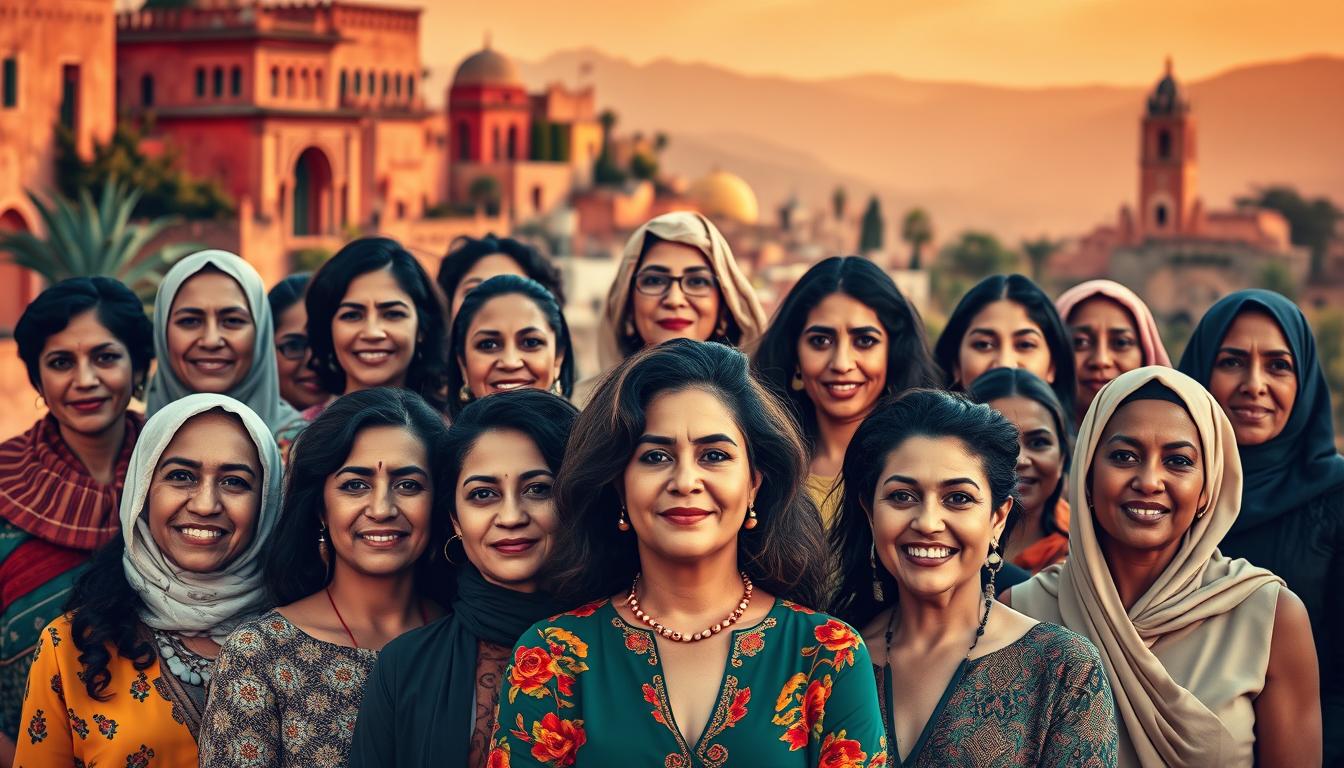
Exploring Morocco’s food shows us how influential Moroccan women shape the country. They do this through its delicious dishes.
Moroccan food is full of flavors and smells. Women lead in keeping these traditions alive. Inspiring female leaders in cooking add new tastes and methods. This changes how we see food.
Cooking and culture meet in Morocco. Here, we see the heart of the country’s food.
Key Takeaways
- Moroccan women are key in keeping and improving traditional food.
- Female leaders are changing Morocco’s food scene.
- Old and new cooking methods mix, changing food.
- Food is a big part of Morocco’s culture.
- Women are at the center of this food change.
The Culinary Tapestry of Morocco: A Cultural Heritage
Moroccan food is a mix of Arab, Berber, Mediterranean, and African tastes. This shows the country’s rich history. The food is shaped by its location, trade routes, and cultural exchange. Women in Morocco, like prominent women from Morocco, help keep and update old recipes.
The Historical Evolution of Moroccan Cuisine
Moroccan food has changed a lot over time. It was influenced by Arabs, Berbers, and Mediterranean traders. Tagine, a slow-cooked stew, is a key example of this change.
Women in Morocco, like accomplished women in Moroccan society, pass down recipes. They change them to fit new ingredients and cultures.
Regional Variations and Distinctive Flavors
Morocco’s different areas have their own food traditions. Coastal cities like Essaouira and Rabat have their own tastes. Inland cities like Marrakech and Fez also have special dishes.
Local ingredients like olives and spices make Moroccan food rich. Famous dishes like Couscous and Pastilla are loved everywhere. But each region has its own twist.
Top Moroccan Food Bloggers Reshaping National Identity
Women in Morocco are changing the food world. They show off the rich flavors of Moroccan dishes. They love food and want to keep their culture alive.
Through their blogs, they share old recipes and cooking tips. They tell stories of Morocco’s famous foods.
Nargisse Benkabbou: Bringing Moroccan Cuisine to Global Audiences
Nargisse Benkabbou is a big name in Moroccan food blogging. She wrote “Moroccan Food Made Simple.” Her work makes Moroccan food known worldwide.

Mina Allam: Preserving Traditional Recipes with Modern Twists
Mina Allam mixes old Moroccan recipes with new ideas. Her blog has classic dishes and modern cooking. It attracts readers everywhere.
Salima Belhaj: Documenting Family Recipes and Cultural Stories
Salima Belhaj writes about her family’s recipes and stories. Her blog is a digital treasure of Moroccan food. It shows the value of keeping cultural traditions alive.
These women are changing how Morocco is seen in the kitchen. They help share Moroccan food with the world. They also inspire other women to share their food stories.
Iconic Moroccan Dishes Celebrated by Female Culinary Leaders
Morocco’s food scene is filled with dishes loved for ages. This is thanks to women who keep the country’s food traditions alive.
Tagine: The Slow-Cooked Masterpiece
The tagine is a famous Moroccan stew. It’s cooked in a special pot. Female culinary leaders have shared its recipes worldwide, showing its deep flavors and cultural value.
Couscous: Friday Tradition and Social Bonding
Couscous is a key part of Moroccan food, eaten on Fridays. It brings people together. Women in Morocco keep couscous recipes alive, sharing them with their families.
| Dish | Occasion | Cultural Significance |
|---|---|---|
| Tagine | Special occasions | Symbolizes hospitality and community |
| Couscous | Fridays, family gatherings | Represents unity and tradition |
| Pastilla | Weddings, holidays | Signifies prosperity and celebration |
Pastilla: The Sweet-Savory Delicacy
Pastilla is a pie filled with meat and spices. Moroccan women chefs have made it special by adding new flavors to the old.
Harira and Other Beloved Soups and Stews
Harira is a soup eaten during Ramadan. Women have celebrated it and other soups, showing their health benefits and cultural worth.
These dishes show the variety and richness of Moroccan food. They also highlight the important role women play in keeping these traditions alive.
From Home Kitchens to International Recognition
Women in Morocco are making a big impact in cooking. They start in their own kitchens and then share their skills worldwide. This shows their hard work and desire to share their culture.

Breaking Barriers in Professional Culinary Spaces
Moroccan women are now leaders in cooking. They work in restaurants, schools, and media. They show off their skills and help change Moroccan food.
They are not just advancing their careers. They are also opening doors for other women in cooking. Their work brings new ideas and views to the table.
How Social Media Platforms Amplify Moroccan Women’s Voices
Social media helps Moroccan women share their cooking. They use Instagram, YouTube, and more. They post recipes, cooking tips, and stories from their culture.
This helps spread Moroccan food and empowers women in cooking. Social media lets them reach more people. They build their brands and join the global cooking talk.
The Sweet Side of Morocco: Desserts and Tea Culture
In Morocco, desserts and tea are very important. They show the country’s rich culture and traditions. Women play a big role in keeping these traditions alive.
Moroccan Pastries: Chebakia, Ghriba, and Seasonal Specialties
Moroccan pastries show the country’s diverse food. Women in Morocco keep old recipes alive. They pass them down to their kids.
Chebakia is a sweet pastry with honey and sesame seeds. It’s eaten during special times like Ramadan. Ghriba is another favorite, made with ground almonds or coconut.
These pastries are more than just treats. They show the creativity and hard work of Moroccan women. They keep old ways alive while trying new things.
The Art of Moroccan Mint Tea: Hospitality in a Glass
Moroccan mint tea is key to the country’s welcoming spirit. Women often make and serve tea as a sign of respect. It’s made with green tea, fresh mint, and sugar.
This tea is a big part of daily life in Morocco. It shows warmth and welcome to everyone who comes.
| Dessert | Description | Occasion |
|---|---|---|
| Chebakia | Honey and sesame seed pastry | Ramadan and special occasions |
| Ghriba | Ground almonds or coconut dessert | Various celebrations and gatherings |
| Mint Tea | Green tea with fresh mint and sugar | Daily hospitality and social gatherings |
Conclusion: How Culinary Ambassadors Are Redefining Morocco’s Global Image
Moroccan women are changing how the world sees Morocco with their cooking. They share traditional recipes and flavors online. This helps people understand and love Moroccan culture more.
These women have turned their kitchens into places that share Moroccan food with the world. They use social media to reach more people. They make dishes like tagine and couscous popular again, mixing old traditions with new tastes.
Thanks to them, Moroccan food is known all over the world. Their work shows how important they are to Morocco’s food history. It’s clear how much they’ve helped change how people see Moroccan cuisine.
Leave a Reply