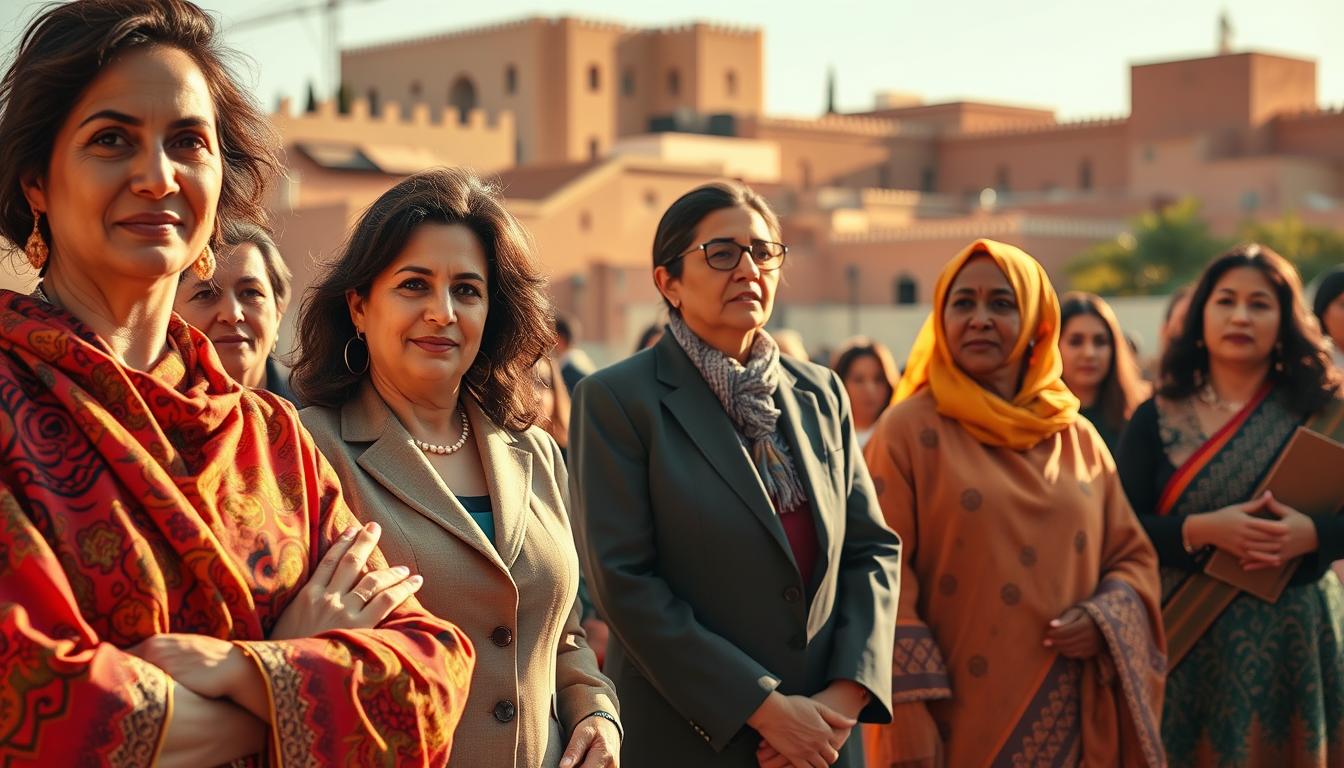
We’re starting a food journey in Morocco. We’ll find the smells and tastes that make this place special. Influential Moroccan women are key here. They keep old recipes alive and also bring new ideas to the table.
In the busy markets and modern kitchens, inspiring female leaders are changing how we see food in Morocco. They keep dishes like tagine and couscous alive. But they also try new things, mixing old and new.
These women do more than cook. They are business owners, chefs, and inventors. They’re making Morocco famous for its food. They show off the variety of Moroccan dishes and inspire others.
Key Takeaways
- Moroccan women play a key role in keeping and improving the nation’s food traditions.
- They lead in Morocco’s food world, from old recipes to new ideas.
- The mix of old and new is shaping Moroccan food today.
- These women are entrepreneurs, chefs, and innovators who inspire others.
- Moroccan food is getting more varied, thanks to these women.
The Rich Culinary Heritage of Morocco
Morocco’s food shows its rich culture. It mixes Berber, Arab, and Mediterranean tastes. This mix comes from its location and history of sharing cultures.
A Tapestry of Berber, Arab, and Mediterranean Influences
Berber people have added a lot to Moroccan food. They brought their own dishes and ingredients. Arabs brought fancy cooking ways. The Mediterranean added its flavors.
This mix is seen in tagine and couscous. They are key dishes in Morocco.
How Women Have Preserved Ancient Cooking Techniques
Women have kept Morocco’s food traditions alive. They teach cooking skills to their families. This way, dishes like pastilla and msemen stay true.
The work of prominent women from Morocco and accomplished women in Moroccan society is very important. They help keep these traditions alive.
| Dish | Influence | Description |
|---|---|---|
| Tagine | Berber, Arab | A slow-cooked stew named after the clay pot in which it is cooked. |
| Couscous | Berber | A traditional North African dish made from crushed durum wheat semolina. |
| Pastilla | Arab, Mediterranean | A savory pie made with layers of flaky pastry, meat, and spices. |
Best Moroccan Spices That Define the Nation’s Cuisine
Moroccan spices are the heart of its cuisine. They add rich flavors and aromas to dishes. Moroccan cuisine is a melting pot of influences, with spices being key.
Ras el Hanout, Cumin, and Saffron: The Holy Trinity
The holy trinity of Moroccan spices is Ras el Hanout, Cumin, and Saffron. Ras el Hanout means “head of the shop” and has up to 30 spices. Cumin warms dishes, and Saffron adds luxury to Chicken Tagine and Couscous.
Female Spice Merchants Breaking Barriers in Traditional Markets
Women are changing Moroccan markets, or souks. They keep old spice traditions alive and bring new flavors.
Spotlight: Fatima Zahara’s Spice Empire
Fatima Zahara is a leader in Morocco’s spice world. Her spice empire is known for quality and tradition. As Fatima Zahara says,
“Spices are not just ingredients; they are the essence of our culture and heritage.”
Tagine: The Iconic Clay Pot Masterpiece
The Tagine is a clay pot dish from Morocco. It’s a big part of the country’s cooking. It’s more than food; it’s a way to share moments with others.
Every part of Morocco has its own Tagine. Marrakech loves lamb and dried fruits. Fez goes for chicken and lemons. This shows how diverse Moroccan cooking is.
Regional Variations from Marrakech to Fez
Marrakech Tagines are full of flavor. They use lamb and dried fruits. Fez Tagines are lighter, with chicken and lemons. This shows how the Tagine can change.
Chef Najat Kaanache: Revolutionizing Traditional Tagine
Chef Najat Kaanache is changing Moroccan cooking. She’s made the Tagine famous worldwide. Her new ideas are exciting.
“The art of cooking Tagine is not just about following a recipe; it’s about understanding the harmony of flavors and the patience required to create something truly special.” – Chef Najat Kaanache
The Seven-Vegetable Tagine Recipe
The seven-vegetable Tagine is loved by many. It uses lots of Moroccan veggies. It also has spices and olive oil.
- Seasonal vegetables (carrots, zucchini, bell peppers, etc.)
- Aromatic spices (cumin, coriander, cinnamon)
- Olive oil
- Preserved lemons
To make this Tagine, start with the spices. Then add the veggies. Finish with olive oil. Cook it slow to mix the flavors.
Couscous: The Sacred Friday Meal
In Moroccan cuisine, Couscous is a dish loved so much it’s a Friday tradition. It’s more than food; it’s a time for families and friends to come together.
The Labor-Intensive Art of Hand-Rolling Couscous
Making Couscous is a skill passed down through generations. It’s made from semolina flour, rolled by hand into small pellets. This hard work is often done together, with women helping each other.

Women Cooperatives Bringing Authentic Couscous to Global Markets
Women’s groups have helped share real Moroccan Couscous around the world. They give women jobs and a chance to share their cooking traditions.
The Ourika Valley Women’s Cooperative Success Story
The Ourika Valley Women’s Cooperative is a great example. It helps local women and sells Couscous all over. Their success shows how prominent female figures from Morocco keep traditions alive and help the economy grow.
“Couscous is more than just a meal; it’s a symbol of our unity and cultural heritage. Through cooperatives like ours, we’re not only preserving our traditions but also empowering our communities.” – Fatima, member of the Ourika Valley Women’s Cooperative.
| Cooperative Name | Location | Products |
|---|---|---|
| Ourika Valley Women’s Cooperative | Ourika Valley, Morocco | Couscous, Traditional Moroccan Spices |
| Tassaout Cooperative | High Atlas Mountains | Couscous, Handmade Crafts |
These groups do more than help the economy. They keep a cultural heritage alive that is very important to Moroccan women.
Pastilla: The Sweet and Savory Delicacy
Morocco’s rich food history shines in Pastilla, a dish that’s both sweet and savory. It has traveled from royal courts to family tables. This shows Morocco’s cultural richness and diversity.
From Royal Courts to Family Tables
Women have played a big role in Pastilla’s story. They kept old cooking ways alive and shared them with their families. Now, Pastilla is a key part of Moroccan food, enjoyed at big celebrations.
Chef Meryem Cherkaoui’s Modern Interpretations
Chef Meryem Cherkaoui is making Moroccan food new again. She mixes old flavors with new ideas, pleasing everyone. Her work keeps Pastilla fresh and exciting for more people.
| Traditional Ingredients | Modern Twists | Innovative Techniques |
|---|---|---|
| Meat (pigeon or chicken) | Vegetarian and vegan options | Molecular gastronomy |
| Layers of flaky pastry | Use of alternative grains | Precision temperature control |
| Spices like cinnamon and ginger | Incorporation of global spices | Advanced spice blending techniques |
Moroccan women keep Pastilla alive by mixing old and new. They make sure it stays important in today’s food world.
Moroccan Breads and Pastries
In Morocco, bread and pastries are more than food. They are a big part of the culture and traditions. The variety and richness show the nation’s culinary diversity.

Daily Staples: Khobz, Msemen, and Harcha
Bread is a big part of daily life in Morocco. Khobz is a staple in every home. It’s often served with meals or used to scoop up food.
Msemen, a folded pancake-like bread, is loved with honey or spices. Harcha, a dense cornbread-like pastry, is great with cheese or butter.
The Mothers and Grandmothers Keeping Tradition Alive
Making traditional Moroccan breads and pastries is a family tradition. Mothers and grandmothers are key in keeping this alive. Their skill and patience feed their families and preserve cultural heritage.
The Rise of Women-Owned Artisanal Bakeries
Women-owned bakeries are on the rise in Morocco. They make high-quality breads and pastries. They also mix old recipes with new ideas.
This trend helps women economically and keeps traditions alive. It shows women’s big impact in Morocco, culturally and economically.
These bakeries also help the world love Moroccan food more. By buying from them, people around the world support women in Morocco. This helps women’s roles in society and economy.
From Home Kitchens to International Recognition
Women in Morocco are becoming famous chefs. They mix old cooking ways with new tastes. This wins hearts around the world.
Moroccan Women Chefs Earning Michelin Stars
Moroccan women are getting big in cooking, with Michelin stars. These influential Moroccan women show off Moroccan food. They also try new things.
Culinary Tourism Led by Female Entrepreneurs
Women are leading a food tour boom in Morocco. They share Moroccan food and traditions with visitors. Guests get to learn and taste.
Cooking Schools Empowering the Next Generation
Women are starting cooking schools too. These schools teach young women to cook. It opens doors to new jobs.
| Culinary Aspect | Traditional Element | Innovative Twist |
|---|---|---|
| Tagine | Slow-cooked meat and vegetables | Use of modern cooking techniques |
| Couscous | Hand-rolled grains | Variety of toppings and flavors |
| Pastilla | Layers of flaky pastry | Incorporation of new fillings |
Conclusion: Savoring the Flavors of Female Leadership
As we end our journey through Morocco’s food, we think about women’s big role in its taste. Women in Morocco are changing their country, one meal at a time.
The tastes of Morocco show its deep food history. Women keep old cooking ways alive, open new markets, and share true Moroccan food everywhere.
Iconic dishes like Pastilla and Khobz are tasty and share Morocco’s story. We celebrate the flavors and women leading Moroccan food. We’re also excited for the next chefs and food lovers who will keep this tradition alive.
Leave a Reply