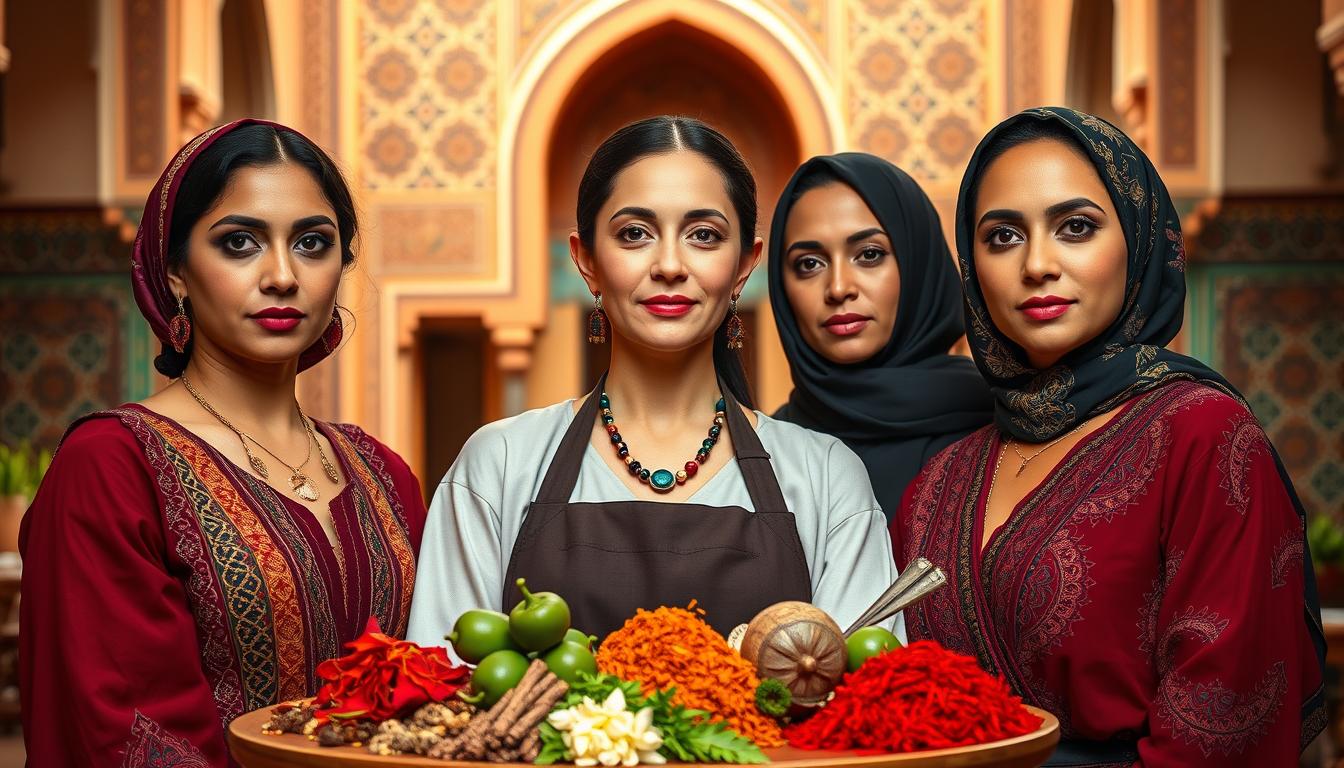
In Morocco, we find influential Moroccan women. They keep their food traditions alive. They also use food to make big changes.
These inspiring female leaders are changing their areas. They do this through cooking and starting businesses. They show how traditional Moroccan cuisine helps women.
They mix their cooking talents with new business ideas. This brings new jobs and helps society grow.
Key Takeaways
- The role of women in preserving Moroccan culinary heritage.
- How traditional cuisine empowers women economically.
- The impact of female leaders on their communities.
- Innovative approaches to culinary entrepreneurship.
- The cultural significance of Moroccan dishes.
The Cultural Power of Moroccan Cuisine in Women’s Lives
Women in Morocco keep traditional cuisine alive. They use their cooking to keep culture strong and help the economy grow. They share recipes and cooking ways, making Moroccan food a big part of the country’s identity.
This shows that Moroccan cuisine is more than food. It’s about empowering women and their big role in the country’s food world.

The Historical Role of Women as Culinary Guardians
For a long time, Moroccan women have kept food traditions alive. They have kept recipes and cooking ways safe. This way, dishes like Tagine and Couscous stay important in Moroccan food.
A famous food critic said, “Moroccan food shows the country’s rich culture. And women are at the center of this tradition.”
“The art of Moroccan cooking is a family tradition passed down through generations of women, each adding their own touch to the recipes.”
How Food Traditions Create Economic Opportunities
Learning to make traditional dishes helps women in many ways. They can sell their food at markets or online. This helps them earn money and be independent.
For example, rural cooperatives help women sell their food. This helps the local economy. So, these women become accomplished women in Moroccan society. They help change things and empower others.
By using their cooking skills, women in Morocco do more than keep their culture alive. They become prominent women from Morocco. They are seen as important for the country’s economy and society.
Traditional Moroccan Cuisine: Iconic Dishes and the Women Behind Them
Moroccan food is a mix of tradition, culture, and family. Women are key in keeping and changing these traditions. They make dishes that are tasty and full of history.
Tagine: The Slow-Cooked Symbol of Patience and Mastery
The Tagine is a special Moroccan dish. It’s cooked slowly in a special pot. This slow cooking makes the flavors rich and tasty.
Women in Morocco know how to make Tagine. They teach their recipes to their families. It’s a dish for special times, showing women’s big role in cooking.

Couscous: The Friday Tradition That Builds Community Leadership
Couscous is a big deal in Morocco, eaten on Fridays. It takes a lot of work to make Couscous. Women are the ones who do it.
Sharing Couscous on Fridays brings families and communities together. Women lead in making these gatherings happen. It shows their leadership.
Pastilla: The Elaborate Delicacy Showcasing Female Artistry
Pastilla is a fancy dish made by Moroccan women. It’s a pie with meat, onions, and spices. It takes a lot of skill to make Pastilla.
Pastilla is for special times. It shows how talented Moroccan women are in cooking. It’s a big deal in their culture.
| Dish | Main Ingredients | Cultural Significance |
|---|---|---|
| Tagine | Meat, Vegetables, Dried Fruits | Symbol of Patience and Mastery |
| Couscous | Semolina Flour, Water | Friday Tradition, Community Bonding |
| Pastilla | Pastry, Meat, Onions, Spices | Showcases Female Artistry, Special Occasions |
Harira: The Ramadan Soup That Sustains Families
Harira is a special soup in Morocco, eaten during Ramadan. It’s made with tomatoes, lentils, and spices. It’s a comforting food for families during fasting.
Women often make Harira for their families. It brings everyone together. It’s a time of comfort and community.
Moroccan Bread (Khobz): Daily Staple and Entrepreneurial Gateway
Moroccan Bread, or Khobz, is eaten with every meal. Women have learned to make this bread for generations. Some women even sell their bread in markets.
This not only helps them financially but also shows their role in feeding their families and communities.
“The art of cooking is not just about feeding people, it’s about bringing them together, creating a sense of community and belonging.” – A Moroccan Cook
Moroccan Mint Tea: The Ceremonial Drink of Hospitality
Moroccan Mint Tea is a big part of Moroccan culture. It shows hospitality and warmth. Women are key in making and serving this tea.
This tea brings people together. It shows respect for tradition and community.
Moroccan Sweets and Pastries: Crafting Culinary Artistry
Moroccan sweets and pastries are famous for their designs and taste. Women in Morocco are experts at making these treats. They use ingredients like almonds and honey.
These sweets are a sign of creativity and skill. They’re served at special times, showing women’s big role in cooking.
From Home Kitchens to National Leadership: Success Stories
In Morocco, women are using traditional cooking to gain economic freedom and lead the country. This change is seen in many places, from small villages to big cities.
Rural Cooperatives: How Traditional Recipes Created Economic Independence
Rural cooperatives help Moroccan women gain economic freedom. They work together to make and sell things like artisanal jams and preserved fruits.
These groups do more than just make money. They also help women become leaders in their communities. For example, the Tafraout Cooperative in the Anti-Atlas region shows how women can run successful businesses together.
Urban Restaurateurs: Breaking Barriers in Male-Dominated Industries
In cities, Moroccan women are opening restaurants. They are showing the world traditional Moroccan cuisine in new ways. This helps keep their culture alive and makes money.
Women in Marrakech and Casablanca are running restaurants that show off Moroccan food. They serve dishes like tagines to pastilla. These places are where people meet to share food and ideas, helping the local economy and changing old ideas about women.
Preserving Heritage While Driving Innovation: Modern Moroccan Female Culinary Leaders
In the heart of Moroccan cuisine, a new generation of female chefs is emerging. They blend tradition with modernity. These leaders are not only keeping the rich gastronomic heritage alive but also innovating in the culinary world.
Their work is putting Moroccan cuisine on the global map. They showcase its unique flavors and traditions.
Internationally Acclaimed Moroccan Female Chefs
Several Moroccan female chefs have gained international recognition. Chefs like Fatima Al Wahabi and Amal Benjelloun are celebrated. They offer innovative takes on traditional Moroccan dishes.
Their restaurants in Marrakech and Fez attract food enthusiasts worldwide. They want to taste the authentic flavors of Morocco with a modern twist.
As highlighted in a recent culinary festival, the impact of these chefs goes beyond their restaurants.
“Moroccan women are the backbone of our culinary tradition, and their influence is felt from the kitchen to the palace,”
noted a prominent food critic. This highlights the significant role these women play in promoting Moroccan cuisine globally.
| Chef | Restaurant | Location |
|---|---|---|
| Fatima Al Wahabi | Le Coeur de la Vie | Marrakech |
| Amal Benjelloun | Dar Roumana | Fez |
Culinary Education: Women Teaching the Next Generation
The preservation and evolution of traditional Moroccan cuisine owe a lot to women in culinary education. The Moroccan Culinary Institute is led by female chefs. They are passionate about teaching the next generation the art of Moroccan cooking.
They teach traditional techniques and encourage innovation and creativity. By passing on their knowledge and skills, these women ensure Moroccan cuisine thrives and evolves.
Looking to the future, women’s role in Moroccan cuisine will remain key. They will keep the heritage alive and drive culinary innovation.
Conclusion: The Continuing Legacy of Moroccan Cuisine in Women’s Empowerment
Traditional Moroccan cuisine has a big role in empowering women. Women in Morocco are making a difference through food. They are experts in famous dishes, start businesses, and lead in cooking.
This food culture brings jobs, keeps traditions alive, and inspires others. It’s a big deal for women in Morocco.
Women in Morocco are changing their country. They work in farms and restaurants. They keep old recipes alive and try new things.
This helps them break into fields mostly run by men. They open doors for themselves and others.
The future looks bright for Moroccan cuisine and women’s empowerment. Famous Moroccan female chefs and cooking schools are training the next leaders. We expect these women to bring positive changes and keep traditions alive.
Leave a Reply