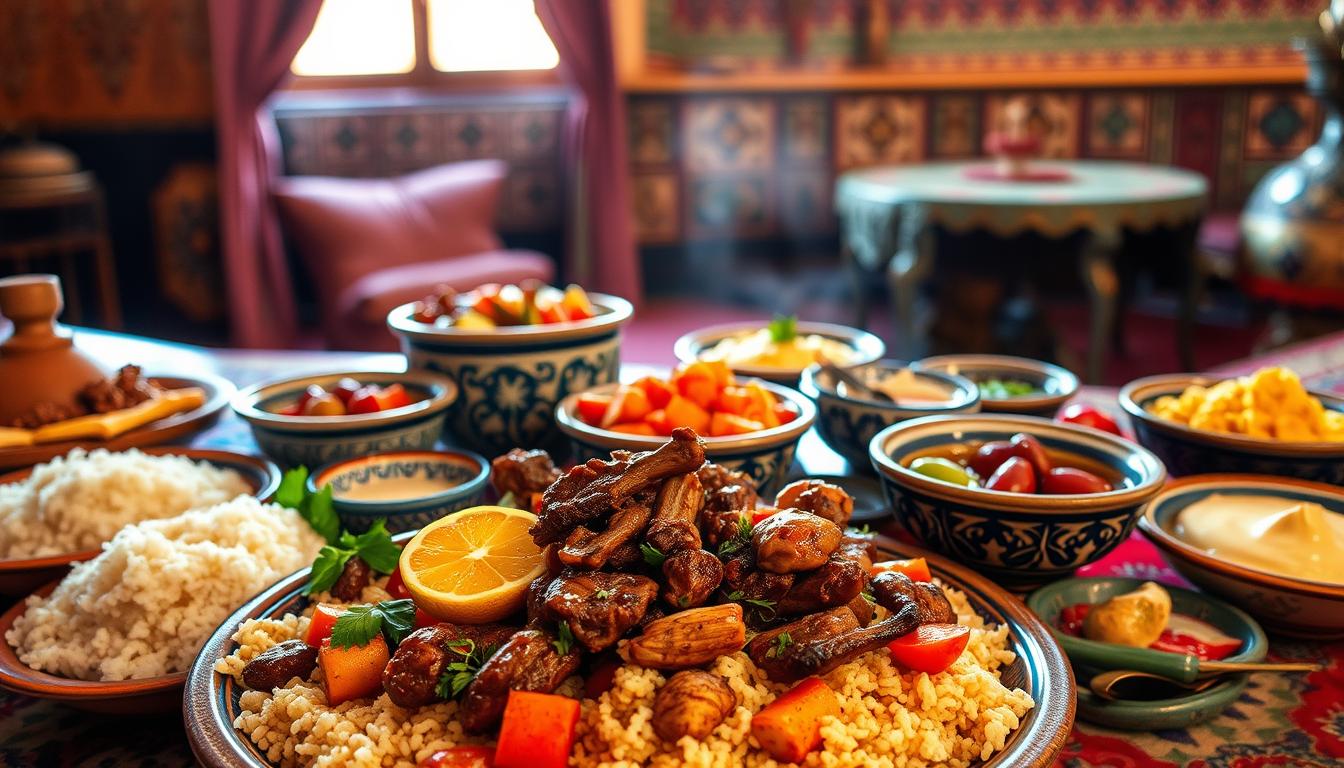
Exploring Moroccan food is like entering a world full of bright tastes and smells. Moroccan cuisine mixes Mediterranean and African flavors. It offers many dishes that excite your taste.
We’re going to look into the soul of Moroccan cuisine. We’ll see its most iconic dishes. From the tasty tagines to the cozy couscous, each dish shares a story of culture and tradition.
Key Takeaways
- Discover the rich flavors of Moroccan tagines.
- Explore the significance of couscous in Moroccan culture.
- Learn about the diverse influences on Moroccan cuisine.
- Find out which Moroccan dishes you must try.
- Understand the role of traditional spices in Moroccan cooking.
Introduction to Moroccan Cuisine
Moroccan cuisine is a mix of Mediterranean, Arab, and African flavors. This mix comes from Morocco’s location and history. It shows the richness of food and culture.
A Blend of Cultures and Flavors
Moroccan food is known for its bold tastes and smells. These come from different cultures. The Mediterranean diet, Arab spices, and African ingredients all play a part.
The cultural diversity of Morocco is seen in its food. Coastal areas use a lot of seafood. The interior focuses on meat and veggies.
The Importance of Spices in Moroccan Cooking
Spices are key in Moroccan cooking. Cumin, coriander, cinnamon, and ginger are staples. Spices are blended with care, with each family having their own secrets.
Spices make Moroccan dishes special. They add flavor and aroma to meals like tagines and couscous.
| Spice | Common Use | Flavor Profile |
|---|---|---|
| Cumin | Tagines, stews | Warm, earthy |
| Coriander | Meat dishes, salads | Citrusy, slightly sweet |
| Cinnamon | Desserts, tagines | Warm, sweet |
| Ginger | Tagines, teas | Spicy, warming |
Learning about spices and culture makes us appreciate Moroccan food more. It’s not just about eating. It’s about the culture, tradition, and history it carries.
Tagine: The Heart of Moroccan Meals
Tagine is at the heart of Moroccan food. It’s a slow-cooked stew that warms your heart. It’s cooked in a special pot with a conical lid.
Tagine is more than food; it’s a sign of Moroccan welcome. It shows the love for cooking in Morocco. Each family has its own tagine recipe. You can find everything from chicken tagine with preserved lemons and olives to lamb tagine with apricots.
Different Types of Tagine
There are many tagine types, each with its own taste. Some favorites include:
- Chicken tagine with preserved lemons and olives
- Lamb tagine with apricots and almonds
- Vegetarian tagine with seasonal veggies
- Beef tagine with prunes and spices
Food lovers say, “Tagine brings people together. Its rich flavors and smells make everyone feel welcome.”
“The art of cooking tagine is a tradition passed down through generations, with each family adding their own twist to the recipe.”
| Type of Tagine | Main Ingredients | Flavor Profile |
|---|---|---|
| Chicken Tagine | Chicken, preserved lemons, olives | Savory, slightly tangy |
| Lamb Tagine | Lamb, apricots, almonds | Rich, slightly sweet |
| Vegetarian Tagine | Seasonal vegetables, spices | Varied, aromatic |
Cooking Methods and Techniques
Slow-cooking is key to a great tagine. Meat or veggies go at the bottom. Spices and fruits on top. The pot’s lid traps steam, making a tasty sauce.
Making tagine takes time, but it’s worth it. The slow-cooking blends flavors. The result is a dish that’s both filling and fragrant.
Couscous: A Staple Comfort Food
Couscous is a key comfort food in Moroccan cooking. It’s made from semolina flour, water, and salt. It’s a big part of Moroccan food.
Traditional Serving Styles
Couscous is a big deal on special days and at family get-togethers. It’s steamed with veggies and meat. This makes it taste amazing and brings people together.
When served, couscous is on a big platter. It’s topped with colorful veggies and meats. The smell and sight of it are amazing.
Variations Across Regions
In Morocco, couscous is made differently in each area. Some add more veggies, others use special spices or meats. This shows how couscous can be many things.
In some places, couscous has a sweet and savory sauce. In others, it’s spicy with harissa. These differences show the creativity of Moroccan people.
Couscous is loved in Morocco, no matter the occasion. Its warmth and flexibility make it a true comfort food.
Pastilla: A Sweet and Savory Delight
Pastilla is a dish that mixes sweet and savory tastes. It shows how clever Moroccan cooks are. This pie has layers of flaky pastry, meat, onions, and spices. It’s topped with sweet powdered sugar and cinnamon.

Ingredients and Preparation
Making pastilla takes a lot of time and skill. The filling has meat (lamb or chicken), onions, spices, and sometimes eggs. The flaky pastry, called warqa, is key to its taste and texture.
The ingredients are put together in a special order. This order helps get the flavors just right. Spices like cinnamon, ginger, and turmeric make pastilla taste unique.
- Meat (lamb or chicken)
- Onions
- Spices (cinnamon, ginger, turmeric)
- Eggs
- Flaky pastry (warqa)
- Powdered sugar and cinnamon for topping
Occasions for Serving Pastilla
Pastilla is often eaten at special occasions like weddings and holidays. It shows hospitality and generosity. So, it’s a big part of Moroccan celebrations.
The mix of savory and sweet in pastilla is special. It shows how Moroccan food can combine different tastes into something great.
- Weddings
- Holidays
- Special gatherings
Harira: Nourishing Soup for All Occasions
Harira is a key dish in Moroccan meals. It’s loved for its flavors and health benefits. It’s a big part of Moroccan food culture, even more so during Ramadan.
Key Ingredients of Harira
Harira is simple yet rich in taste. It has tomatoes, lentils, chickpeas, and spices. These ingredients make it both tasty and healthy.
To make Harira, onions, garlic, and spices are sautéed. Then, tomatoes, lentils, and chickpeas are added. A special mix thickens the soup just right.
Seasonal Variations
Harira is enjoyed all year, but changes with the seasons. In winter, more lentils and chickpeas make it warmer. In summer, it’s lighter with less lentils.
Harira is loved by all because it can be made many ways. It’s great as a starter or main dish. It’s always nourishing and tasty.
Moroccan Mint Tea: A Traditional Drink
Moroccan mint tea is more than a drink. It shows warmth and kindness. This tea is key in Moroccan culture, showing the country’s love for guests.
The Art of Brewing
Brewing Moroccan mint tea is a special tradition. It needs green tea, fresh mint, and sugar. The quality of these and how you make it changes the tea’s taste and smell.
To make a great cup, start with good green tea, like Chinese gunpowder. Add fresh mint and sugar to the tea. Pour it from high up to make it frothy, like Moroccan mint tea.
Key Steps in Brewing Moroccan Mint Tea:
- Boil green tea leaves in water.
- Add fresh mint leaves and sugar to the teapot.
- Pour the tea from a height to create a frothy texture.
Significance of the Tea Ceremony
The tea ceremony is big in Morocco. It shows respect and welcome to guests. The tea-making is done with care and flair, following old traditions.
“The serving of tea is a gesture of friendship and respect in Moroccan culture.”
At social events, the host makes and serves tea. It’s a sign of welcome and kindness. The tea ceremony is about the company, talking, and bonding.
| Aspect | Description | Cultural Significance |
|---|---|---|
| Brewing Technique | Boiling green tea with fresh mint and sugar. | Reflects hospitality and generosity. |
| Tea Ceremony | Serving tea with ceremony and flair. | Symbolizes respect and friendship. |
| Social Bonding | Sharing tea during social gatherings. | Strengthens relationships and fosters community. |
Mechoui: The Ultimate Roasted Lamb
In Morocco, Mechoui is more than food; it’s a special experience. It’s roasted lamb that brings people together. Families and friends gather for Mechoui on special days.
Cooking Techniques for Perfect Mechoui
The secret to great Mechoui is slow cooking. The lamb is roasted over an open flame. This makes the meat tender and full of flavor.
Preparation is key. The lamb is marinated in spices before roasting. This makes it extra tasty.
To get the signature tender texture, the lamb cooks for hours. This slow cooking makes the meat tender and adds a smoky flavor.
Best Served on Festive Occasions
Mechoui is a hit at big gatherings and special events. It’s the main dish, served with spices and bread. Sharing Mechoui shows unity and joy.
At weddings, holidays, or family reunions, Mechoui is the star. It creates lasting memories. Mechoui means celebration and togetherness in Moroccan culture.
Zaalouk: A Flavorful Eggplant Salad
Zaalouk is a famous Moroccan dish. It’s a tasty eggplant salad. It’s made with eggplants, tomatoes, garlic, and spices.

Preparation and Serving Suggestions
To make Zaalouk, you cook the ingredients slowly. This makes the salad thick and flavorful. It’s great as a side or main dish.
It’s best with crusty bread or grilled meats. Some people add fresh herbs or lemon juice for extra taste.
Variations of Zaalouk
In different parts of Morocco, Zaalouk is made in many ways. Some add more veggies or change the spices. This makes Moroccan food exciting and varied.
| Region | Variation | Key Ingredients |
|---|---|---|
| Marrakech | Spicy Zaalouk | Chili peppers, garlic |
| Fez | Herb-infused Zaalouk | Fresh parsley, cilantro |
| Rabat | Classic Zaalouk | Tomatoes, eggplant, garlic |
These changes show how Zaalouk can be different in each place. It’s a dish that everyone can enjoy, whether in Morocco or at home.
Moroccan Bread: A Daily Essential
Bread is at the heart of Moroccan food. It’s more than just a side dish. It’s a key part of eating together.
People use bread to pick up sauces and stews. It’s very important in Moroccan meals.
Varieties of Bread
Morocco has many kinds of bread. Each one is special in its own way. The khobz is a crusty bread often baked in big ovens.
Other kinds include:
- Khobz: A crusty bread that’s both rustic and flavorful.
- Mleslou: A softer, often slightly sweet bread.
- Matlou: A traditional bread that’s sometimes topped with seeds or herbs.
These breads are not just food. They are a big part of Moroccan culture. They are baked fresh every day.
Bread’s Significance in Meals
Bread does more than just fill your belly. It’s a key part of the meal. We use it to pick up food and soak up sauces.
Bread also means hospitality and community. In Morocco, giving bread to guests shows respect and welcome.
Bread is always there in Moroccan meals. It’s versatile and very important. It makes meals special.
B’stilla: A Unique Pastry Wonder
B’stilla is a special pastry from Morocco. It mixes sweet sugar with savory meat. All this is wrapped in flaky pastry layers.
Making B’stilla is like an art. It needs the right mix of tastes and textures. This dish shows how creative Moroccan food can be. Its layers make it a treat to eat.
Layers of Flavor in B’stilla
B’stilla is special because of its layers. It has layers of warqa (a type of Moroccan pastry), meat, onions, and spices. These ingredients work together to make a great taste.
| Layer | Ingredients | Flavor Profile |
|---|---|---|
| Outer Layer | Warqa Pastry | Flaky, crispy |
| Meat Layer | Meat (chicken or others), onions, spices | Savory, slightly sweet |
| Final Touch | Powdered sugar, cinnamon | Sweet, aromatic |
Popular Variations
Traditional B’stilla uses chicken. But, popular variations use lamb or beef. Some recipes add extra spices or herbs for a special taste.
B’stilla is more than just food. It’s an experience that brings people together. Its complex making and rich taste make it a highlight in Moroccan food.
Sfenj: Sweet Moroccan Doughnuts
Sfenj is a sweet treat from Morocco. It’s loved by many and enjoyed with coffee or tea.
Ingredients and Cooking Methods
To make sfenj, you need flour, yeast, sugar, and salt. The trick is frying them right. This makes them crispy outside and soft inside.
- Ingredients: flour, yeast, sugar, salt, and water.
- Cooking Method: Deep-frying until golden brown.
Making sfenj is easy but takes practice. The dough rises, making the sfenj special.
Where to Find the Best Sfenj
You can find sfenj in Moroccan cafes and street stalls. Some places are famous for their sfenj.
In Morocco, try sfenj from local spots. It’s authentic and helps the community.
Enjoying sfenj is fun, whether in the morning or as a snack. It’s a memorable part of your Moroccan trip.
Conclusion: Embracing Moroccan Flavors
Moroccan cuisine has made a big splash around the world. Its rich flavors and smells have won hearts everywhere. This has made Moroccan food very popular globally.
Culinary Influence Around the World
Moroccan food mixes Mediterranean, Arab, and African tastes. This mix has changed cooking everywhere. Chefs love using Moroccan spices and slow cooking methods.
Discovering Moroccan Cuisine
Try Moroccan dishes to see what all the fuss is about. It’s perfect for food lovers or those new to international food. Let’s dive into the world of Moroccan cooking together.
Leave a Reply