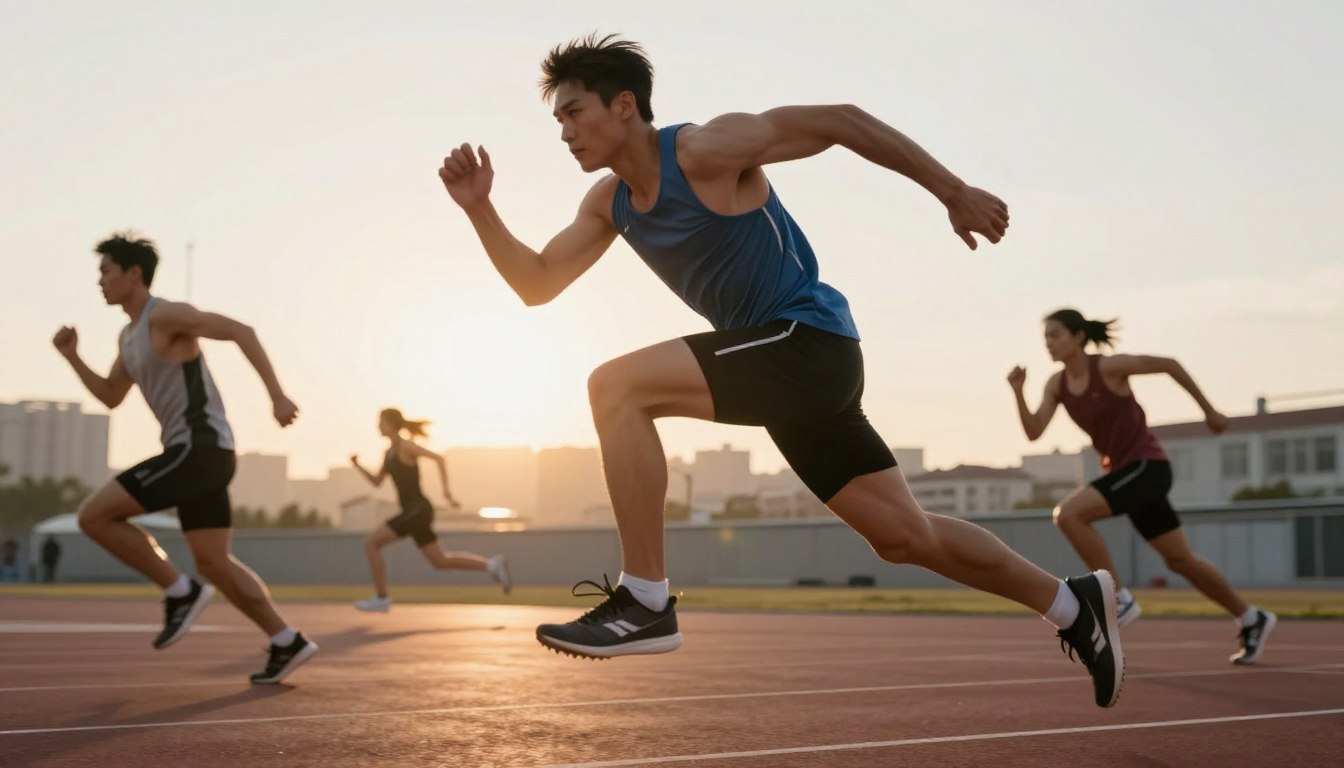
Have you ever wondered why some people seem to glide through life easily? Others struggle with every step. Physical grace is a secret many high performers keep.
It’s not just about being strong. Speed and efficiency in movement are key. We aim to optimize movement speed by improving coordination.
Being graceful helps us do chores faster. It also boosts our performance in sports. Mastering our form lowers the risk of getting hurt.
This approach makes our daily lives better. We think that improving our mechanics leads to lasting benefits.
Every step should feel easy. Let’s explore these important physical concepts together.
Key Takeaways
- Importance for movement mechanics.
- Benefits within daily life.
- Athletic performance gains.
- Injury prevention strategies.
- Coordination as a foundation.
- Effortless stride techniques.
Understanding Agility: What It Means for Your Body
Agility is more than just moving fast. It’s about moving well and doing things right. We’ll see how agility makes us better at sports and daily tasks.
The Definition of Agility
Agility means being quick to change direction and speed. It’s about using fast movement techniques, balance, and coordination. It’s not just for athletes. It helps everyone move better every day.
Fitness expert Vern Gambetta says, “Agility is not just about the body. It’s also about quick thinking and adapting to new situations.”
“Agility is the ability to change direction quickly, to accelerate and decelerate, and to react to different stimuli.” – Vern Gambetta
Benefits of Being Agile
Being agile has many good points. It makes sports better, lowers injury risk, and boosts fitness. It also helps with weight and metabolism. Here are some main benefits:
- Improved balance and coordination
- Enhanced athletic performance
- Better reaction time
- Increased flexibility
| Benefit | Description |
|---|---|
| Improved Balance | Agility training makes balance better by testing how well the body moves. |
| Enhanced Performance | Agility is key for sports and activities needing quick changes in direction or speed. |
| Better Reaction Time | Agility training makes the body quicker to react to new things, improving reaction time. |
How Agility Impacts Daily Life
Agility is important for more than sports. It helps us in daily life too. It’s useful for moving through crowds and responding fast in emergencies. Agility makes us better at improving movement efficiency in everyday situations.
Adding agility training to our workouts makes us stronger and better at life. As we learn more about agility, we see its value goes beyond sports.
The Science Behind Body Lightness
Learning about body lightness can make you move better and feel good. It’s about feeling easy and quick when you move. Many things affect this feeling.
To feel light, you need the right muscles and food. The mix of muscles and what you eat matters a lot.
The Role of Muscle Composition
Muscle type is key to feeling light. There are slow and fast muscles. Slow muscles last longer, and fast muscles are for quick moves. You need both for good movement.
Having the right muscles helps you move better. For example, fast muscles are great for quick, strong moves.
Importance of Flexibility
Being flexible is also important for feeling light. It means you can move more easily. Being flexible helps avoid injuries and makes you move better.
- Stretching helps you be more flexible.
- Stretching should be part of your fitness plan.
- Yoga and Pilates are good for flexibility and balance.
Nutrition’s Impact on Body Weight
What you eat affects how light you feel. Eating the right mix of foods is key. Protein helps your muscles, and carbs give you energy.
Drinking enough water is also important. It helps your muscles work well and recover. Eating right can make you move better and feel lighter.
By knowing these things, you can get better at feeling light. This makes you move better and live better.
Exercises to Improve Agility
Agility is key to being fit. You can get better at it with special exercises. This makes you faster and safer.
We mix dynamic stretching, balance, and agility drills in our training. Each part helps you move quicker and better.
Dynamic Stretching Routines
Dynamic stretching is important for agility. It moves your joints and keeps muscles ready. This makes you flexible and safe.
- Leg swings (front and back)
- Hip circles
- Arm waves
- Torso twists
Balance and Coordination Workouts
Balance and coordination are key for agility. They help you adjust fast. This makes you better at moving.
Some good workouts for balance and coordination are:
- Single-leg squats
- Heel-to-toe walks
- Balance boards or BOSU ball training
Agility Drills for Athletes
Agility drills are great for athletes. They make you faster and quicker. This helps you do better in sports.
| Drill | Description | Benefits |
|---|---|---|
| Shuttle Runs | Running back and forth between two points | Improves speed and reaction time |
| Cone Drills | Weaving through cones set up in a specific pattern | Enhances agility and coordination |
| Ladder Drills | Performing footwork patterns through a ladder | Boosts speed and agility |

Adding these exercises to your routine will boost your agility. This makes you fitter and better at sports.
Enhancing Lightness Through Nutrition
The right food is key to being lighter. It helps you move better and perform better. Eating well keeps your body healthy and ready for exercise.
Foods That Promote a Healthy Body Weight
Choosing the right foods is important for staying healthy. Foods like leafy greens, fruits, and lean proteins are great. They give you energy without making you too heavy.
- Leafy greens like spinach and kale
- Fruits such as berries and citrus fruits
- Lean proteins including chicken, fish, and tofu
Hydration and Its Effects
Drinking enough water is very important. It helps your muscles work well and you move faster. Not drinking enough can make you tired and slow.
Meal Timing for Optimal Performance
When you eat matters a lot. Eating the right meal before exercise gives you energy. Eating after exercise helps your muscles heal.
- Eat a balanced meal 1-3 hours before exercise
- Include a mix of complex carbohydrates, protein, and healthy fats
- Replenish nutrients after exercise with a post-workout meal or snack
The Mind-Body Connection in Agility
Agility is more than just physical strength. It also involves mental strategies and awareness. Understanding the mind-body connection is key to improve movement efficiency. This connection affects how we see our surroundings, react to challenges, and move.
The mental side of agility includes important parts that help us perform better. By focusing on these, we can get better at agility.
Mental Strategies to Improve Performance
To get better at agility, we need mental strategies. These should boost our confidence and reduce anxiety. Positive self-talk and setting goals can help us move better and more precisely.
Setting goals helps us stay focused and motivated. Performance psychologists say, “Goal setting is a powerful tool that can enhance an individual’s motivation and direction, leading to improved performance.”
“The mind is the limit. As long as the mind can envision the fact that you can do something, you can do it, – as long as you really believe 100 percent.”
Visualization Techniques
Visualization is a strong tool for athletes and performers. It lets us mentally practice our actions. By imagining ourselves doing movements well, we can do them better in real life. This mental practice builds neural pathways for improving movement efficiency.
To use visualization well, find a quiet, comfy spot to relax and focus. Close your eyes and vividly imagine the movements. This prepares your mind and body for the best performance.
Mindfulness and Movement
Mindfulness is key in agility. It helps us stay present and focused. Being mindful lets us better sense our body’s position and movement. This makes our actions more precise and efficient.
Mindfulness through meditation and mindful movement boosts body awareness. This awareness is vital for quick, effective movements. It helps us improve overall agility.
By adding these mental strategies to our training, we can improve agility in a holistic way. This boosts our physical skills and mental toughness and focus.
Agility in Everyday Activities
Agility is important in many parts of our lives. It helps us move faster and better in sports, fitness, and daily tasks. It makes us move smoothly and safely, helping us avoid injuries.

Moving with Grace and Ease
Agility lets us move smoothly and quickly. It’s great for getting through crowded places or doing fast sports moves.
To move better, we need to do exercises that improve balance and flexibility. Dynamic stretching routines and balance workouts are good for this.
- Practice dynamic stretching to improve flexibility and range of motion.
- Engage in balance and coordination exercises to enhance overall agility.
- Incorporate agility drills into your fitness routine to boost speed and reaction time.
Agility in Sports and Fitness
In sports and fitness, agility is key. It helps athletes move fast and change direction quickly. This gives them an edge in competitions.
Agility training for athletes includes special drills. These drills improve speed and reaction time. They help athletes do complex moves well.
Everyday Scenarios Requiring Agility
Agility is important in daily life too. It helps prevent falls in older adults and improves reaction times in emergencies. It also makes us more mobile.
- Navigating through crowded areas or uneven terrain requires agility to avoid obstacles.
- Engaging in physical activities such as hiking or dancing benefits from improved agility.
- Quickly responding to emergencies or unexpected situations is facilitated by agile movements.
Understanding agility’s role in daily life is key. By adding agility exercises to our routines, we can live better and move better.
Age and Agility: Can You Maintain It?
Agility is for everyone, not just the young. As we get older, our bodies change. But, we can still keep our agility sharp.
Agility Across Different Life Stages
Agility helps at any age. Kids and teens use it to get better at moving. Adults get fitter and avoid injuries. Older folks stay steady and keep their freedom.
- Childhood and Adolescence: Agility training is fun in play and sports. It boosts speed and coordination.
- Adulthood: Adults get better at sports and daily tasks. They also get more fit.
- Older Age: Older adults can do exercises to balance better. This lowers the chance of falling.
Maintaining Agility in Older Adults
Keeping agile in older age is key. Simple moves like tai chi and brisk walks help a lot. Adding strength training is also good for muscles and flexibility.
Key Strategies:
- Do balance exercises every day.
- Walk or swim regularly.
- Do strength training to keep muscles strong.
Age-Related Changes in Muscle and Flexibility
Our muscles and flexibility get less with age. This can slow us down. But, the right exercises can slow down these changes.
“Regular physical activity, including exercises that challenge balance and coordination, can significantly reduce the risk of falls in older adults.”
Knowing how aging affects us helps. We can stay agile and mobile by fighting these changes.
Common Misconceptions About Agility
Many people think agility is just for athletes. But it’s a skill that can be learned. Agility is more than being fast. It also means being able to change direction quickly and balance well.
Knowing what agility really is helps us get better at moving. We can learn to be more agile by understanding and fixing common myths.
Debunking Myths
One myth is that only athletes need agility. But it’s good for everyone. It makes us fitter and less likely to get hurt. Another myth is that agility gets worse with age. But with the right training, anyone can stay agile.
Let’s look at some myths and what’s really true in the table below:
| Myth | Reality |
|---|---|
| Agility is only genetic. | While genetics help, training can make you much more agile. |
| Agility training is only for young athletes. | It’s good for all ages, making us fitter and safer. |
| Agility cannot be improved with age. | With the right training, anyone can stay agile, even as they get older. |
Understanding Genetic Factors
Genetics do affect how agile we are at first. Things like muscle type and coordination are partly genetic. But, that doesn’t mean we can’t get better.
Genetic factors can influence:
- Muscle fiber type (fast-twitch vs. slow-twitch)
- Neuromuscular coordination
- Body structure and flexibility
Knowing about these genetic factors helps us make better training plans. We can focus on what we’re good at and work on the rest.
The Role of Training and Practice
Training is key to getting better at agility. Doing specific drills and exercises regularly helps. This includes stretching, balance exercises, and agility drills.
Effective training tips:
- Start with dynamic stretching to prepare muscles for agility training.
- Incorporate balance and coordination exercises to improve neuromuscular control.
- Use agility drills that mimic the movements of your sport or daily activities.
Being consistent and patient is important. With regular practice, you’ll see your agility improve over time.
The Future of Agility Training
Agility training is getting ready for big changes. New tech and understanding of our bodies will lead to new ways to get faster.
Innovative Techniques and Technologies
New tools like AI and wearable tech will change agility training. They help track how we move better. This means training can be tailored to fit each person’s needs.
Trends in Agility Coaching
Coaching is moving towards a whole-body approach. It mixes physical and mental training. This mix is becoming more common in the field.
Impact of Emerging Research
New studies on how we move and our bodies are helping. They give us new ways to train. Athletes and coaches can use these findings to get better.
Leave a Reply