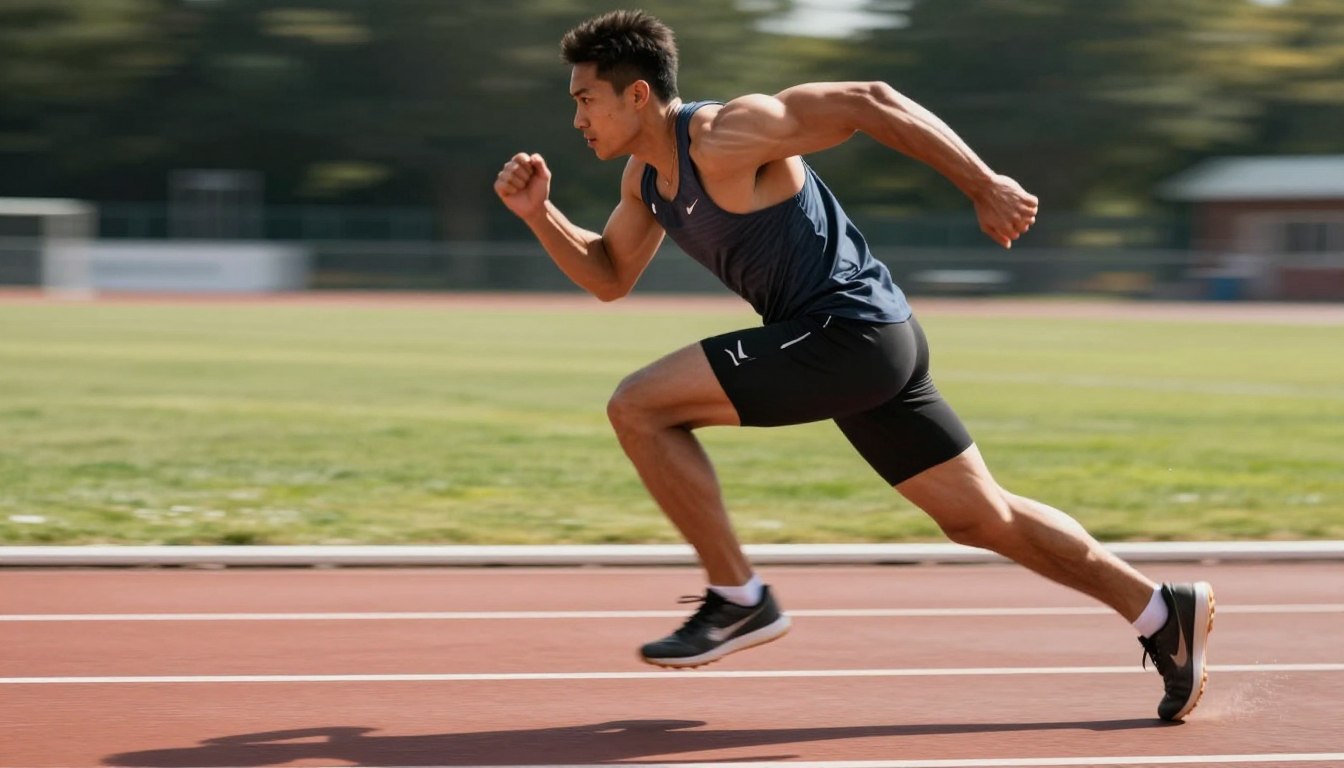
Have you ever noticed how some people move easily while others struggle? Most of us don’t think about how we move around. But, learning to move fast and well is key for being good at physical things.
By improving how we move, we can do better and feel less tired. Our guide will teach you the basics. We aim to help you move better and feel more agile.
We often forget about the physics of moving. But, how we move affects our health. Learning these tips helps us control our movements better.
This focus can make our daily lives better. Small changes can lead to big improvements over time. Let’s dive into the science of moving well.
Key Takeaways
- Understanding mechanics boosts overall performance.
- Better form helps reduce tired muscles.
- Science-based methods help the body move.
- Regular practice helps agility for everyone.
- Good posture protects joints from extra stress.
Understanding the Science Behind Movement Optimization
Moving fast and moving well comes from knowing how our bodies work. It’s about understanding how different parts of us work together.
The Relationship Between Speed and Efficiency
Speed and being efficient are two sides of the same coin. Speed is how fast we move. Efficiency is using less energy to move.
Being efficient saves energy and keeps us from getting tired or hurt. But moving faster uses more energy. So, finding the right mix of speed and efficiency depends on what we’re doing.
How Neuromuscular Systems Enable Rapid Motion
The neuromuscular system is key for quick movements. It helps muscles work together smoothly. Neural drive is how strong the signal is to muscles, affecting speed.
Training this system can make us move faster and stronger. It also helps us adapt to different movements.
Energy Systems That Power Swift Mobility
Our body’s energy systems work together for quick movements. The phosphagen, anaerobic glycolytic, and aerobic systems each play a part. Knowing how they work helps us train better.
For quick, short bursts, the phosphagen system is key. For longer, slower activities, it’s the aerobic system. Tailoring training to these systems can boost performance.
Biomechanical Principles for Streamlined Performance
Getting better at moving fast and well means learning about biomechanics. It’s not just about speed. It’s also about moving with precision and using less energy.
Force Production and Transfer Mechanics
Force is key to moving. Knowing how to make and move force well is important. Efficient force transfer happens when muscles, tendons, and bones work together.
How we move force through our body affects our performance. The kinetic chain helps us understand this. It shows how force moves from the ground up, through our body.
Leverage Optimization Through Joint Positioning
How we place our joints is also crucial. It helps us use our body better. By placing joints right, we can move more efficiently.
Knowing how each joint works helps us move better. For example, how we stand affects our performance and safety.
Center of Mass Control for Agile Movement
Keeping our center of mass stable is important. It helps us move quickly and safely. Training programs that strengthen our core help with this.
Being able to change our center of mass quickly is also key. It helps us perform better in many activities.
The Role of Elastic Energy in Quick Execution
Elastic energy helps us move faster and better. It’s stored in muscles and tendons. This energy boosts our speed and power.
Learning to use this energy well improves our movement. It makes us more efficient and effective.
Evaluating Your Movement Patterns and Capabilities
Starting to move better begins with checking how we move now. Knowing our good and bad points helps us move faster.
Looking at how we move in different ways is key. We need to see what we can do better.
Conducting a Personal Movement Assessment
To check how we move, we watch ourselves every day. We record ourselves doing things to see how we stand and move.
It’s important to notice if we feel pain. Also, checking our flexibility, strength, and balance helps us understand how we move.
Identifying Compensatory Patterns That Limit Performance
Compensatory patterns are ways we move to hide weaknesses. They might help us now but can hurt us later.
Spotting these patterns takes careful watching. If we always lean on one side or strain certain muscles, it’s a clue.
Establishing Baseline Metrics for Progress Tracking
After finding what needs work, we set goals to track our progress. We might time ourselves, measure how far we can stretch, or check our exercise scores.
By watching these numbers, we can tweak our training. This helps us get better faster and avoid getting stuck.
Proven Techniques for Speed and Efficiency in Movement
To move fast and well, we need to learn special techniques. These help us move quickly and with less effort. They make our body work better.

Optimizing Stride Mechanics and Ground Contact Time
Being efficient in movement starts with good stride mechanics. We want to step fast and land softly. This saves energy and makes us go faster.
Proper stride mechanics mean landing right under our body’s center. This makes stepping smoother and helps us move better.
Coordinating Upper and Lower Body for Fluid Agility
Moving well means our upper and lower body work together. This balance helps us stay steady and move smoothly. It keeps our pace steady and makes us agile.
Using our core muscles helps too. It keeps us stable and makes our movements stronger.
Breathing Strategies for Sustained Optimal Pace
How we breathe affects our speed and endurance. Breathing in sync with our movement keeps our muscles oxygenated. This helps us stay strong and focused.
Every activity needs its own breathing rhythm. We need to find one that fits our movement and keeps us going.
Mental Focus Techniques for Seamless Operation
Keeping our mind sharp is key to moving smoothly. Focus helps us avoid mistakes and move better. It makes us more efficient.
Using visualization and mindfulness can improve our focus. They help us perform well, even when it’s hard.
Training Methods for Developing Rapid Motion
To get fluid agility, you need special training. These methods help you move fast and well. This is key for sports and everyday life.
Plyometric Progressions for Explosive Power
Plyometric exercises are key for quick motion. They make your muscles strong and fast. We start with simple jumps and box jumps.
Then, we add more intensity and complex moves. For example, we do double-leg jumps and single-leg hops. We also do depth jumps to boost power.
Speed Drills That Enhance Acceleration
Speed drills help you get faster. They are short, intense runs with breaks. We do sprints, hill sprints, and resisted sprints.
By improving our technique and intensity, we get better at quick starts.
Agility Training for Multi-Directional Movement
Agility training makes you quick in all directions. It includes shuttle runs, cone drills, and ladder drills. These drills make you fast in different ways.
Agility training boosts your fluid agility. It helps you do better in sports and activities that need quick changes.
Interval Protocols for Sustained Quick Execution
Interval training helps you stay quick over time. It mixes high-intensity exercise with rest or low-intensity exercise. For example, we use HIIT to boost fitness and keep moving fast.
Strength and Mobility Foundations for Enhanced Performance
Strength and mobility are key for better performance. To move well, you need a strong base that includes both.
Core Stability for Efficient Power Transfer
A stable core is vital for moving power well. It helps send forces through the body, making movements stronger and more controlled.
Doing planks, side planks, and Russian twists can strengthen your core. These exercises make your core muscles stronger and more stable.
Lower Body Strength Development Strategies
Strong legs are important for power and speed. Squats, lunges, and deadlifts work the legs, glutes, and hamstrings.
Adding these exercises to your routine boosts leg strength. This helps improve your overall performance.
Mobility Work for Greater Range and Freedom
Mobility exercises keep you moving well and prevent injuries. Leg swings and hip circles improve flexibility and reduce stiffness.
Regular mobility work lets your body move freely and efficiently. This boosts your performance.
Recovery Protocols to Maintain Optimal Pace
Recovery is key to staying at your best. Stretching, foam rolling, and rest help fight fatigue and keep you in top shape.
By focusing on recovery, you stay ready to perform at your highest level.

| Component | Description | Benefits |
|---|---|---|
| Core Stability | Exercises targeting core muscles | Efficient power transfer, improved control |
| Lower Body Strength | Squats, lunges, deadlifts | Enhanced power, speed, and overall performance |
| Mobility Work | Leg swings, hip circles | Improved flexibility, reduced stiffness |
| Recovery Protocols | Stretching, foam rolling, rest | Mitigated fatigue, maintained peak condition |
Practical Applications Across Different Domains
Speed and efficiency in movement are important in many areas of life. They help us do better in sports, daily tasks, and training. By using these principles, we can improve how we move.
Enhancing Athletic Performance in Competitive Sports
In sports, winning by a little bit is big. Optimizing speed and efficiency in movement gives athletes an edge. They use plyometric training, speed drills, and agility exercises to get better.
A sprinter can get faster with training that focuses on quick starts and staying fast. It’s not just about being fast. It’s also about moving well and using force right.
| Sport | Key Movement Optimization Techniques | Benefits |
|---|---|---|
| Sprinting | Plyometrics, Speed Drills | Improved Acceleration, Top-End Speed |
| Team Sports (Soccer, Basketball) | Agility Training, Quick Change of Direction Drills | Enhanced Agility, Faster Reaction Times |
| Distance Running | Endurance Training, Efficient Stride Mechanics | Better Pace Maintenance, Reduced Fatigue |
Improving Functional Movement in Daily Activities
Speed and efficiency help us in daily life too. Walking, climbing stairs, or carrying groceries gets easier. It’s less straining when we move better.
Improving posture and core stability helps with daily tasks. We do more with less effort. This comes from exercises that strengthen our core and improve flexibility.
Sport-Specific Movement Optimization Techniques
Different sports need different movements. Knowing what each sport demands helps us train better. We can tailor our training to fit the sport.
- Soccer: Agility drills that mimic the quick changes of direction on the field.
- Swimming: Techniques that improve stroke efficiency and reduce drag.
- Cycling: Optimizing pedal stroke mechanics for better power transfer.
Injury Prevention Through Proper Movement Mechanics
Understanding speed and efficiency helps prevent injuries. Good movement mechanics spread forces right. This lowers the risk of injuries.
Learning to land safely from jumps or change direction without putting excessive stress on the knees helps. It lowers the risk of common sports injuries.
Conclusion
Moving quickly and smoothly is complex. It involves science, biomechanics, and training. These help us get better at moving fast.
Being fast is key for athletes and anyone wanting to do things better. The tips we talked about help you move quickly and well.
Using these tips can make our movements better. It also helps avoid injuries. As we learn more, we can move even better.
Leave a Reply